
Project Nexus

What is Project Nexus?
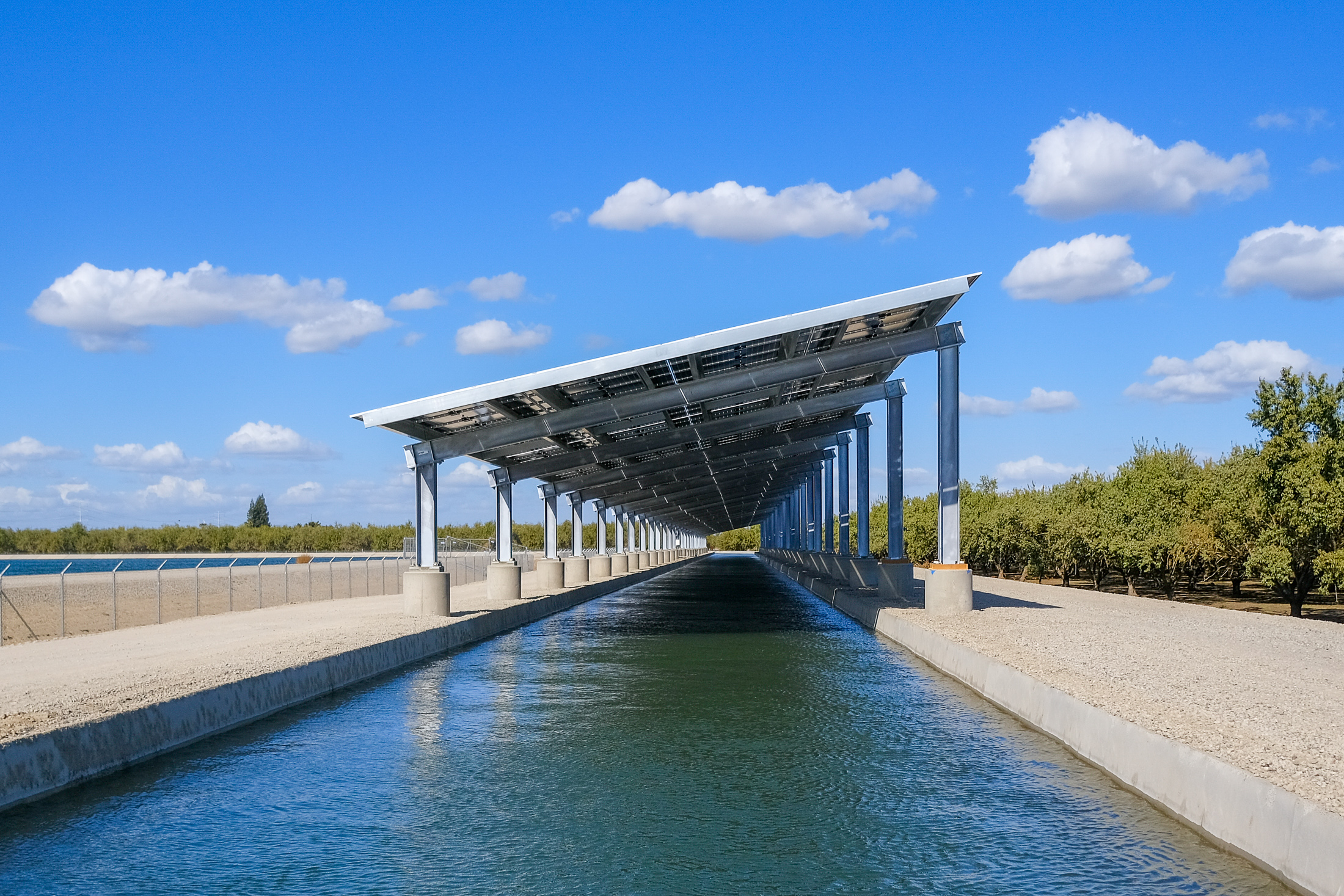
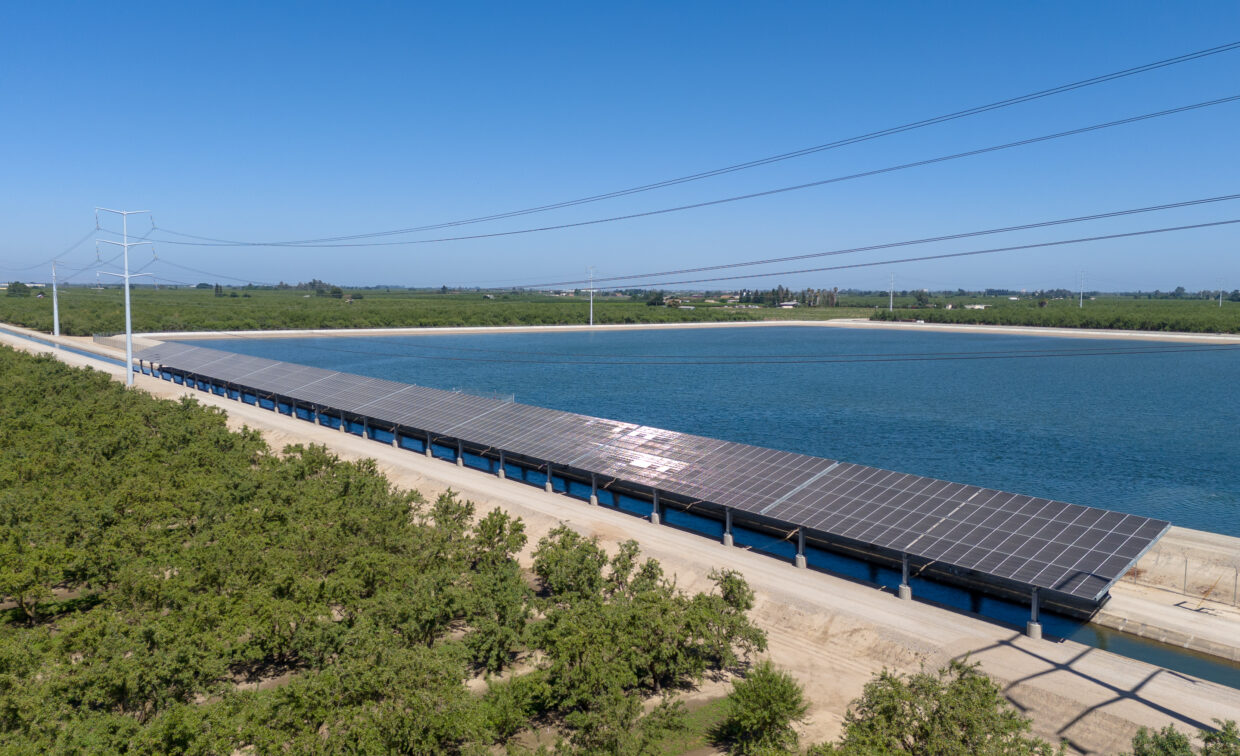
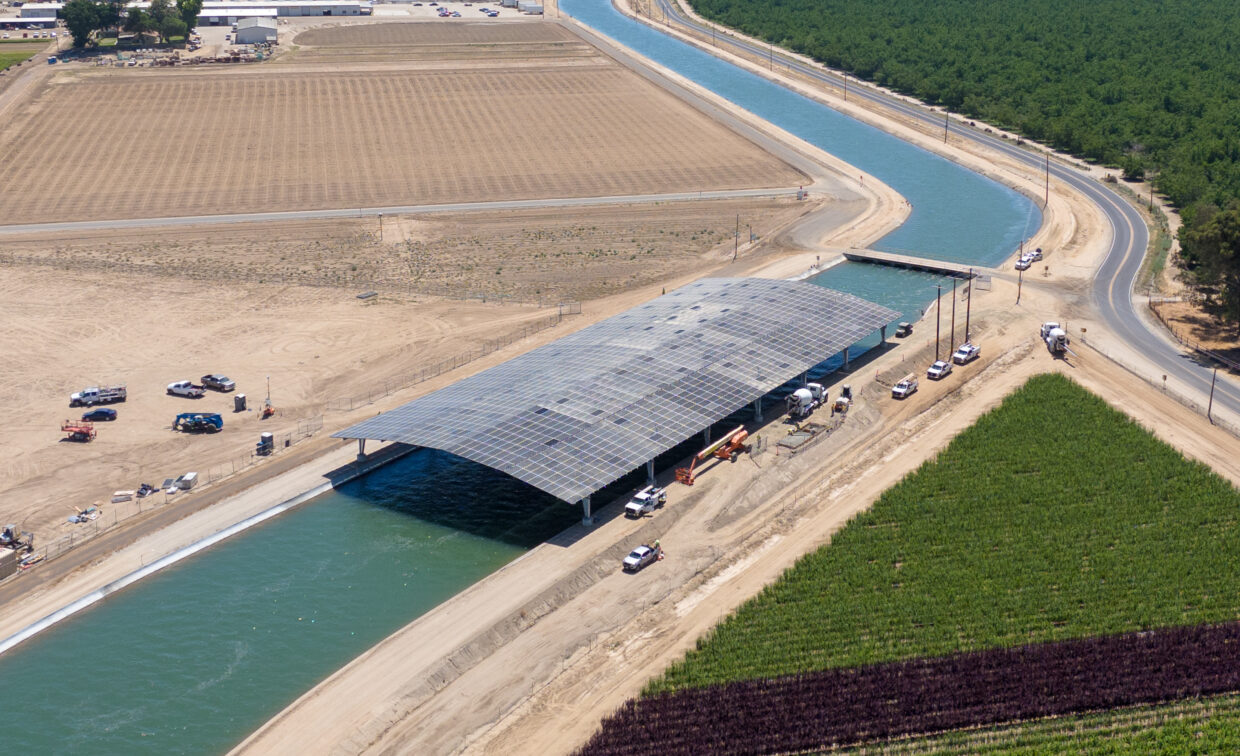
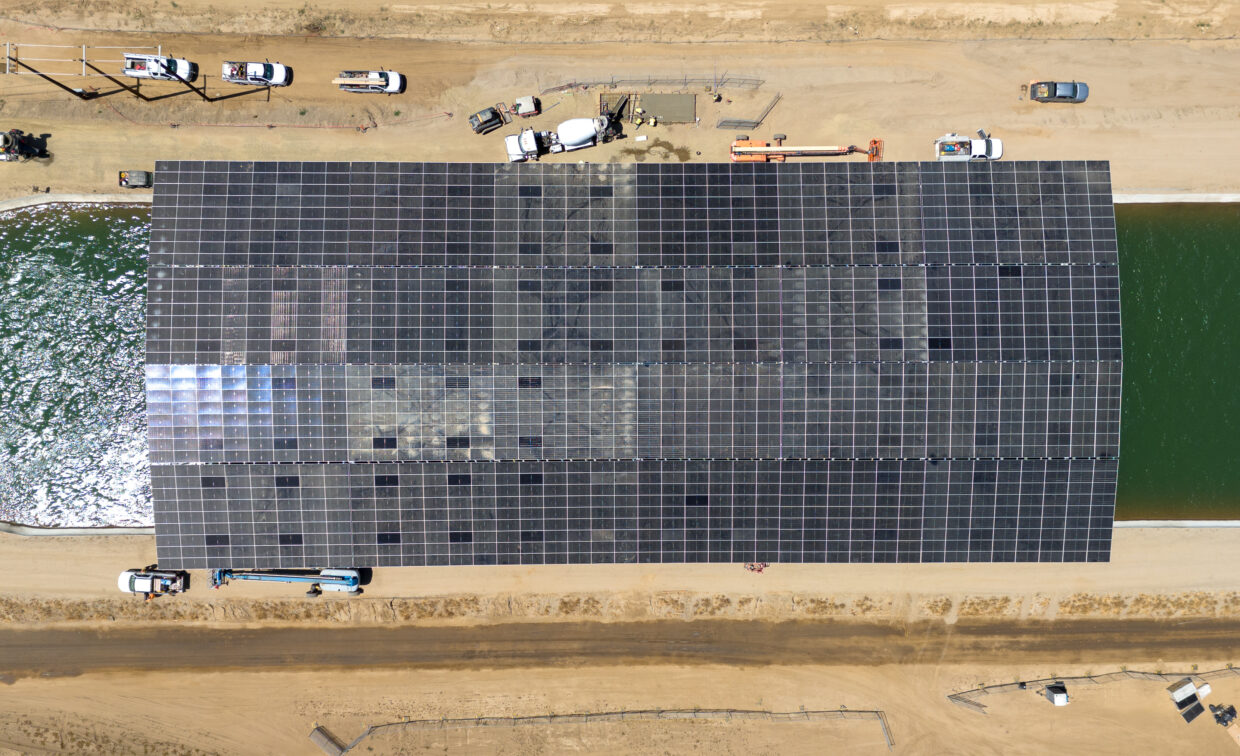
Project Nexus includes the installation of solar panel canopies over various sections of Turlock Irrigation District’s (TID) irrigation canals. Project Nexus serves as a proof of concept to pilot and further study solar-over-canal design, deployment, and co-benefits on behalf of the State of California using TID infrastructure and electrical grid access.
The Project at both locations was completed and commissioned by August 2025.
Project Nexus Update
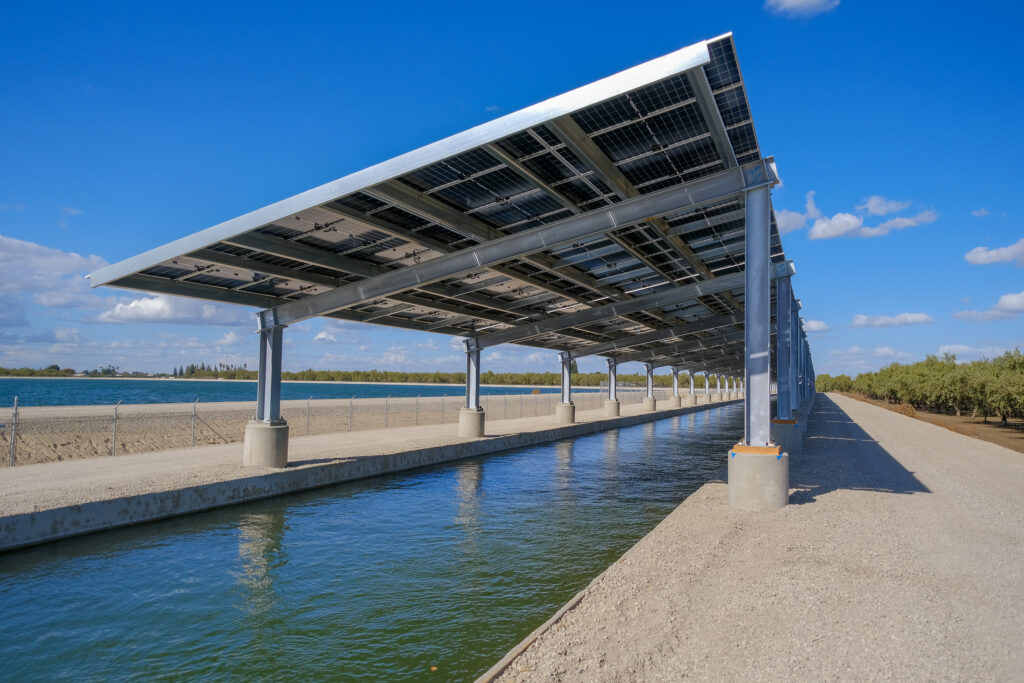
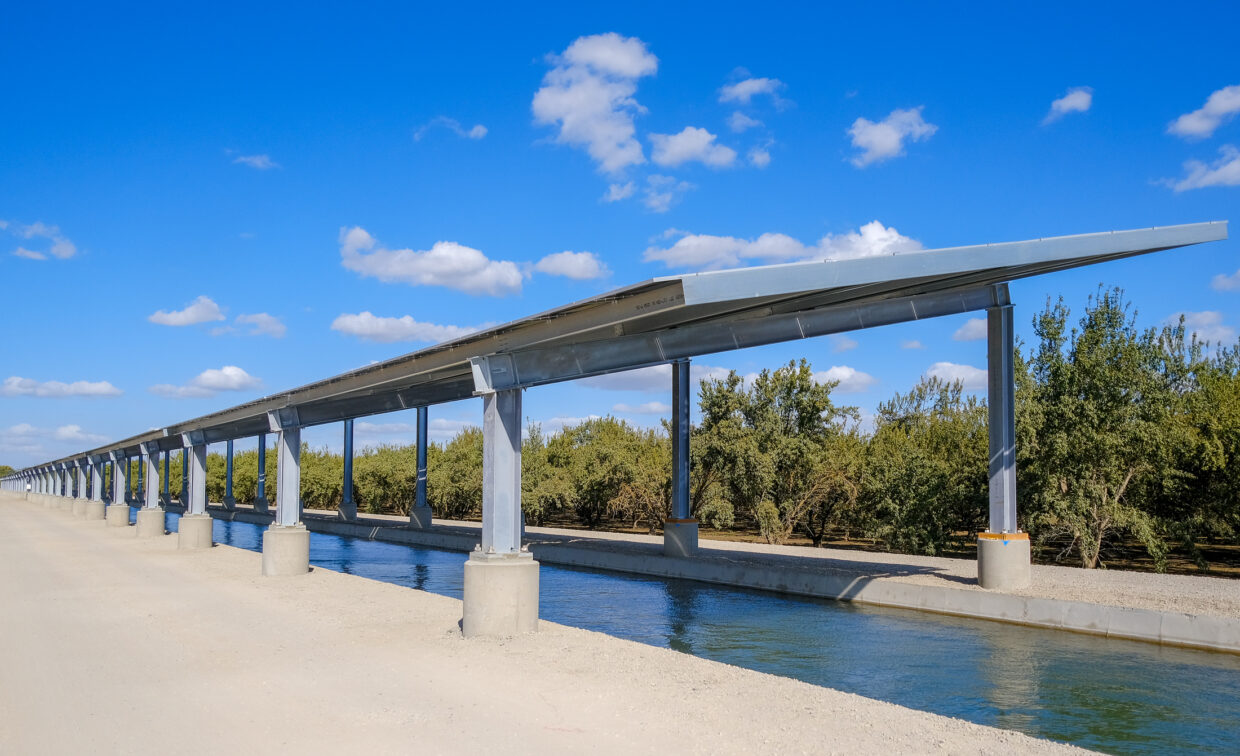
Construction has been completed at the 20-foot-wide canal project location, with the first solar panels now fully mounted over TID canals as of March 2025.
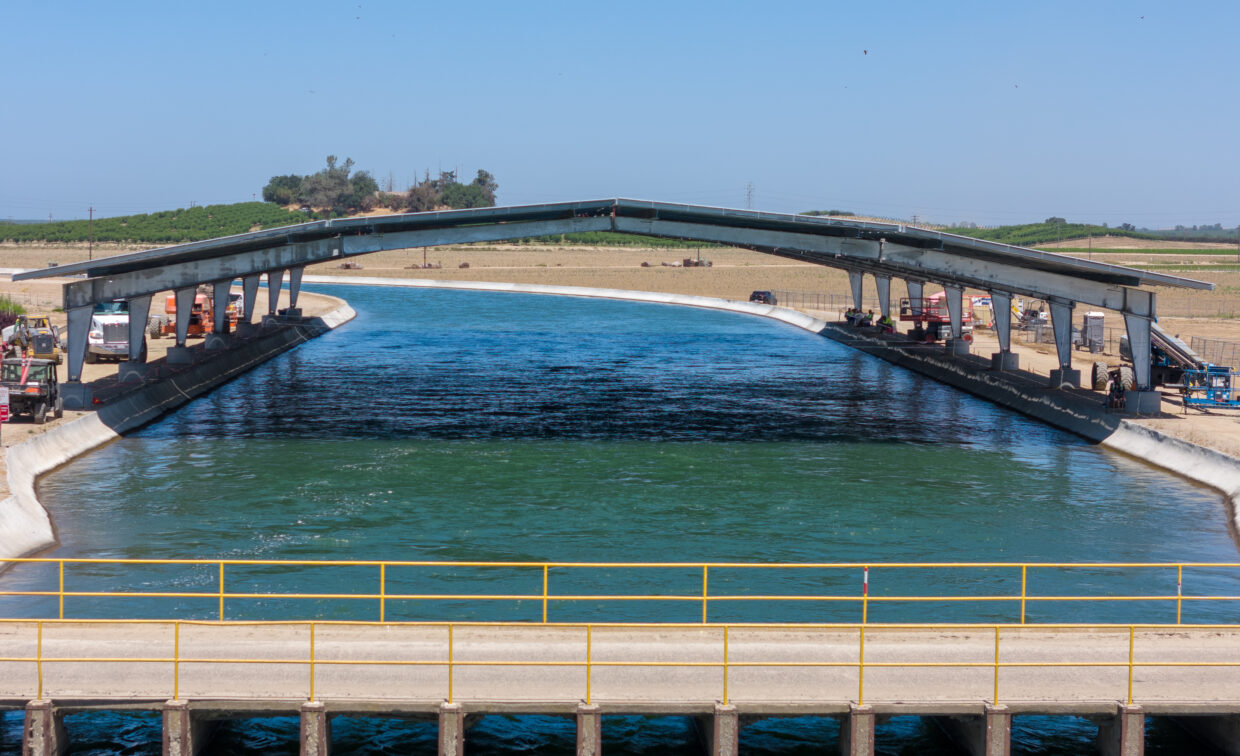
The panels on the 110-foot-wide canal was completed and commissioned in August 2025. University of California, Merced has positioned research equipment at both sites to collect baseline data.
Project Nexus Fast Facts
- First in the Nation project
- TID was the first publicly-owned irrigation district in CA
- Collaboration among public, private, and academic sectors
- Funded by the State of California
- Two project sites along various sections of TID’s canal system
- Providing over 1.6 MW of renewable power generation
- Energy storage incorporated at the Narrow-span location through 75 kW iron-flow batteries
Who are the Project Nexus Partners?
The first test deployment of solar panels over open canals in the nation is being developed as a public-private-academic collaboration, including:
- Turlock Irrigation District – The first irrigation district in California, TID is uniquely suited to pilot this project as both an irrigation district with 250 miles of canals and a retail electricity provider to homes, businesses and farms in the Central Valley.
- CA Department of Water Resources – DWR is committed to exploring all efforts meant to advance the integration of renewable energy to provide clean energy to California. The Department is providing technical assistance and $20 million of funding from the state general fund to TID.
- Solar AquaGrid – Bay Area development firm Solar AquaGrid serves as the program manager for Project Nexus. Solar AquaGrid originated the pilot project after first commissioning the UC Merced Study in 2015 and is facilitating collaboration among TID and the various parties to bring Project Nexus to fruition.
- UC Merced – Located only a few miles from TID, UC Merced researchers have been contracted to provide ongoing support, research, and analysis of the project for both the state and the public.
Project Nexus Goals
- Assess the feasibility of installing solar panels over canals
- Determine the reduction in water evaporation and aquatic plant growth
- Evaluate the improvements to water quality
- Provide renewable power generation
- Demonstrate scalability
UC Merced Study
The 2021 study showed that covering all of the approximately 4,000 miles of public water delivery system infrastructure in California with solar panels can result in significant, water, energy, and cost savings for the state. The study illustrates a savings of 63 billion gallons of water annually (enough to irrigate 50,000 acres of farmland or meet the residential water needs of more than 2 million people).
Based on data from the published study, the researchers estimated that covering the state’s canals with solar would generate 13 gigawatts of power, which is more than half the projected new solar capacity needed by 2030 to meet the state’s decarbonization goals. As such, Project Nexus is a way to test these conceptual projections at a much smaller scale.
Frequently Asked Questions
What is Project Nexus?
The Project is a partnership between TID, California Department of Water Resources, the University of California, Merced, and development firm Solar AquaGrid. Project Nexus will serve as a proof of concept to pilot and further study solar-over-canal design, deployment, and co-benefits on behalf of the State of California using TID land and energy grid access.
The primary goals of Project Nexus include:
- Demonstrate proof of concept of narrow- and wide-span canal coverage with solar panels
- Increase renewable power generation
- Reduce water evaporation in canals
- Experience water quality improvements
- Reduce vegetative growth in the canals
- Investigate energy storage via use cases
- Investigate integration between renewable power generation and energy storage
How did Project Nexus get its name?
The pilot project is called Project Nexus as a nod to the water-energy nexus paradigm gaining attention among public utilities. Utilities are increasingly recognizing the symbiotic relationship between water management and energy management and are finding ways to design projects and actions that benefit the stewardship of both resources beyond what has been done historically.
Project Nexus goes beyond recognizing the linkage that water is used for energy production and energy is used for water treatment and conveyance. With Project Nexus, existing water conveyance infrastructures will serve as the foundation for solar canopies to produce renewable energy. The water in the canals has the potential to cool the solar panels, increasing their efficiency. The solar panels provide shade and wind protection over the water, reducing evaporation and also leading to a reduction in aquatic growth, improving water quality. Project Nexus has the potential to demonstrate a new, innovative water-energy nexus project that can be replicated elsewhere in the state and nation to increase efficiencies in managing limited natural resources.
Who are the Project Nexus Partners?
The first test deployment of solar panels over open canals in the nation is being developed as a public-private-academic collaboration, including:
- Turlock Irrigation District – The first irrigation district in California, TID is uniquely suited to pilot this project as both an irrigation district with 250 miles of canals and a retail electricity provider to homes, businesses, and farms in the Central Valley.
- CA Department of Water Resources – DWR is committed to exploring all efforts meant to advance the integration of renewable energy to provide clean energy to California. The Department is providing technical assistance and $20 million in funding from the state general fund to TID.
- Solar AquaGrid – Bay Area development firm Solar AquaGrid serves as the program manager for Project Nexus. Solar AquaGrid originated the pilot project after first commissioning the UC Merced Study in 2015 and is facilitating collaboration among TID and the various parties to bring Project Nexus to fruition.
- UC Merced – Located only a few miles from TID, UC Merced researchers have been contracted to provide ongoing support, research, and analysis of the project for both the state and public.
Additionally, the Project is endorsed by several other non-partner agencies, such as the CA Environmental Protection Agency and the CA Natural Resources Agency.
What are some benefits of solar panels over canals?
It is expected that the solar shading over canals will provide various co-benefits, including reduced water evaporation resulting from mid-day shade and wind, water quality improvements and reduced canal maintenance through lessened vegetative growth, renewable electricity generation, and air quality improvements, among others. Working with the research team at UC Merced, the Project Nexus partners added multiple 75 kW iron-flow batteries at the location for energy storage capabilities to support the local electric grid when solar generation is suboptimal.
In addition to advancing both renewable energy and water conservation locally with the Project, installing solar panels over canals offers many promising advantages statewide; covering all of the approximately 4,000 miles of public water delivery canals has benefits related to efficiency, cost, air quality, and ecology. Putting solar panels over water rather than land can help cool the solar panels, making them more efficient. Solar cells become less efficient as they heat up, however the canal water under the shade from the structures has a cooling effect that increases the panels’ conversion ability. In addition, shading exposed waterways not only reduces evaporation, but also curtails the growth of aquatic weeds, which reduces canal maintenance costs.
Putting solar panels over canals rather than installing them on undisturbed land can save money and permitting time while giving already productive land a double use for both irrigation delivery and energy generation.
What were some findings of the 2021 University of California study?
The UC Merced study showed that covering California’s approximately 4,000 miles of public water delivery infrastructure with solar panels can result in significant water, energy, and cost savings for the state. The study illustrates a savings of 63 billion gallons of water annually–enough to irrigate 50,000 acres of farmland or meet the residential water needs of more than 2 million people. Based on data from the published study, the researchers estimated that covering the state’s canals with solar would generate 13 gigawatts of power, which is more than half the projected new solar capacity needed by 2030 to meet the state’s decarbonization goals. As such, Project Nexus is a way to test these conceptual projections at a much smaller scale.
Why was Turlock Irrigation District selected?
Formed in 1887, TID was the first irrigation district formed in California and provides irrigation water to 4,700 growers who farm about 150,000 acres in the San Joaquin Valley. TID also provides power to homes, businesses, and farms. TID’s unique position as both an electrical utility and an irrigation district with 250 miles of canals, as well as its proximity to UC Merced were all considerations in its selection for the pilot project. Innovative projects like this fall in line with the mission, vision, and core values of TID. TID accepted state funding on February 8, 2022 to build a pilot program of solar panels over water canals, the first in California.
Where (and when) will solar panel canopies be installed within TID?
The solar panels were built over both wide- and narrow-span sections of TID canals in Stanislaus County, with the canal sections ranging from 20 feet to 100 feet wide. The Project was fully commissioned at both locations by August 2025.
How much water could TID conserve with Project Nexus?
The amount of evaporation savings that TID will see as a result of Project Nexus is currently unknown, however, it is one of the central points of study to be completed by UC Merced. In addition to water conservation, potential improvements to water quality through reduced vegetative growth is of significant interest to TID. Although the exact amount of water TID might conserve is also unknown, the UC study illustrated that covering all of the approximately 4,000 miles of California canals could save 63 billion gallons of water annually, comparable to the amount needed to irrigate 50,000 acres of farmland or meet the residential water needs of more than 2 million people.
It is expected that an overall analysis of water savings, land use savings, maintenance cost savings, renewable electricity generation, and corresponding reductions in greenhouse gas emissions will provide Project Nexus partners a holistic look at the compounding advantages resulting from solar-over-canal installations.
How is Project Nexus timely?
Project Nexus acts as a necessary experiment during a time where state mandates call for increased renewable energy sources. Committed to promoting discovery, advancement, and innovation, the District is continually searching for new ways to generate sufficient power for their customer base while also working to meet the renewable energy goals issued by the state, which mandates that 60% of California’s electricity is considered renewable by 2030 and 100% carbon-free by 2045. Through state funding, Project Nexus helps TID reach these goals at no extra costs to their customers. After a full irrigation season is complete, UC Merced and TID can begin to determine the water, energy, and cost savings the district might obtain from the Project.
Additional Resources
Contacts
TID – Josh Weimer | jmweimer@tid.org | 209.883.8361
Solar AquaGrid – Pamela Wellner | pamelaw@solaraquagrid.com
DWR – Akiela Moses | Akiela.Moses@water.ca.gov
UC Merced – Patty Guerra | pcortez8@ucmerced.edu | 209.769.0948